
Glass Walls and Open Code: What AI Means for the Software We All Share
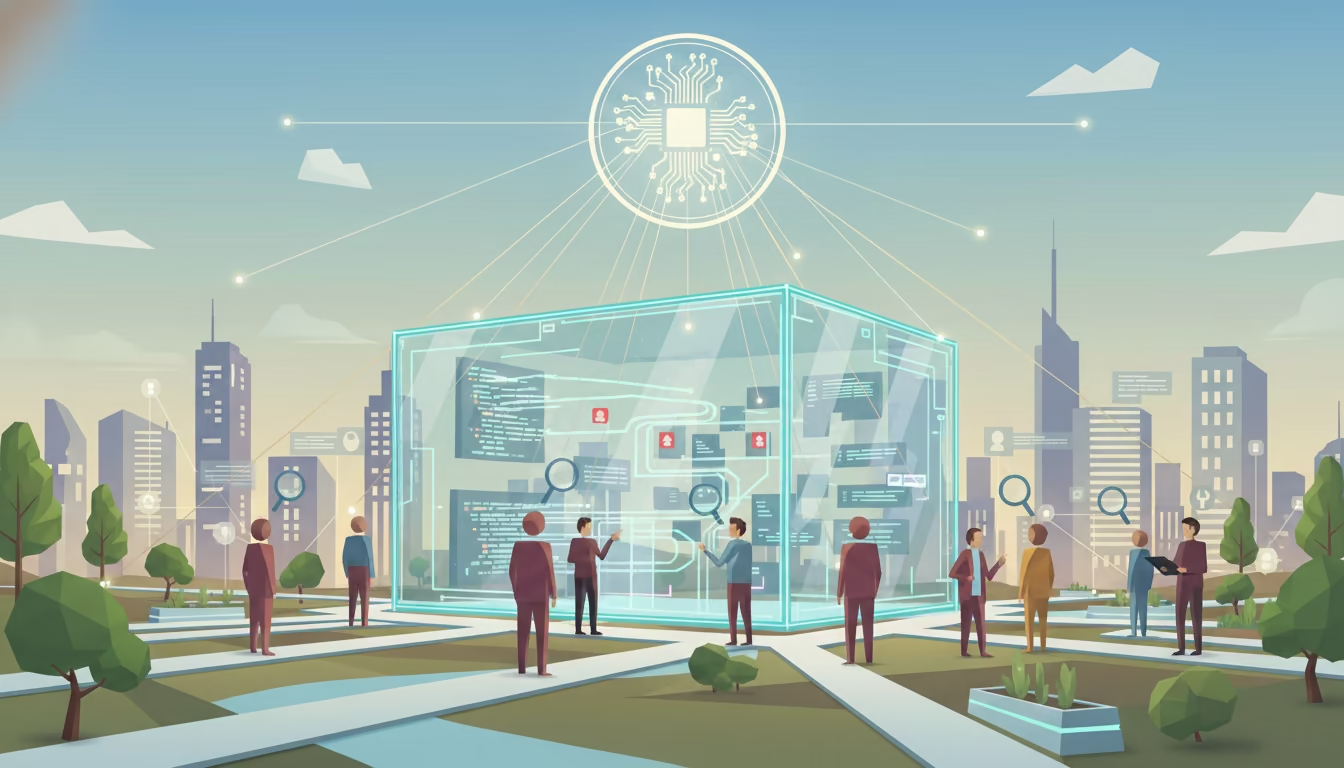
There was a time when sharing your code with the world felt like an act of quiet generosity. A developer in San Francisco could write a small library that solved a tricky problem, push it to the internet, and within weeks, someone in Berlin would pick it up and build something entirely new with it. This culture of openness gave us some of the most important software the world runs on today; from the Linux operating system powering nearly every server on the internet, to the humble tools that help millions of websites load in your browser every morning. Open source was, for decades, a handshake built on trust.
Then artificial intelligence showed up and changed the conversation.
A New Kind of Power Meets an Old Kind of Trust
AI did not arrive gently. It arrived with the ability to read, understand, and generate code at a speed no human could match. Large language models trained on billions of lines of publicly available code can now write entire applications, translate programs from one language to another, and here is where things get uncomfortable find weaknesses in software faster than any team of human reviewers ever could.
Open source projects have always operated on the principle that transparency makes software safer. The idea is simple and intuitive; if anyone can see the code, anyone can spot and fix a bug. For decades, this logic held up remarkably well. Critical vulnerabilities were found and patched by passionate volunteers and corporate contributors alike. But that logic was built for a world where the "anyone" doing the looking was a person with limited time and attention. AI does not have those limitations.
When the Lights Are On and Everyone Can See
Imagine a building made entirely of glass. Every wall, every door, every lock mechanism is visible to anyone passing by. For years, this was fine because most passersby were friendly neighbors or curious architects who would point out if a hinge looked weak. But now imagine giving every single person on the street a pair of binoculars that can zoom in on every bolt, every wire, every scratch in the glass and some of those people do not have the best of intentions.
That is roughly the situation open source finds itself in today. The code is public by design. AI tools can now scan enormous codebases in minutes, mapping out logic flows, identifying patterns that tend to lead to vulnerabilities, and flagging entry points that a malicious actor might exploit. What once took a skilled hacker weeks of manual effort can now be accomplished in an afternoon by someone with access to the right model and a clear enough prompt. This does not mean open source is broken. But it does mean the old assumption that openness automatically equals safety deserves a harder look.
The Defender's Dilemma
Here is the difficult truth that security researchers have been debating in conference halls and online forums: AI is a tool, and like all tools, it serves whoever wields it. The same model that helps a well-meaning developer audit their project for flaws can help an attacker find those same flaws first. The race between defense and offense in cybersecurity is not new, but AI has dramatically accelerated the pace.
When a vulnerability is found in a small library that happens to be a dependency of thousands of other applications, the ripple effect can be enormous. AI makes finding those quiet, overlooked weaknesses significantly easier.
The Other Side of the Coin
It would be unfair, and inaccurate, to paint this as a purely negative story. AI is also becoming one of the most powerful allies open source has ever had. Automated code review tools powered by machine learning can now catch subtle bugs that human reviewers routinely miss. Projects that once relied on a handful of overworked maintainers can now use AI assistants to triage issues, suggest fixes, and even generate documentation the kind of unglamorous work that often goes undone.
Some of the most exciting developments in AI itself have come from the open source community. Openly released models, shared training datasets, and transparent research papers have pushed the entire field forward in ways that closed, proprietary development simply could not have achieved on its own.
The Supply Chain Problem Nobody Talks About at Dinner
Modern software is not built from the ground up by one team. It is pieced together using hundreds of ready-made parts created by strangers across the world. A typical application might depend on dozens, sometimes hundreds, of open source libraries, each of which depends on other libraries, forming a vast web of trust. When you install an app on your phone, you are implicitly trusting not just the company that made it, but every single contributor to every single library buried deep in its code.
AI makes it possible to probe this supply chain at scale. An attacker could use a model to identify the weakest link perhaps a package maintained by a single developer who has not updated it in months and either exploit a known flaw or, more cunningly, contribute a subtle malicious change that looks innocent enough to pass review. This kind of supply chain attack is not theoretical. It has already happened. AI simply makes it cheaper and faster to attempt.
So Where Does This Leave Us?
Open source is not going away. It should not go away. The collaborative model that lets a teenager in Hanoi and a retiree in Tokyo contribute to the same project remains one of the most remarkable things humanity has built with the internet. The software that runs hospitals, banks, space missions, and the device you are reading this on right now owes an unpayable debt to open source contributors.
But the age of AI demands that we evolve how we think about this model. Transparency is still a strength, but it is no longer sufficient on its own. It must be paired with active, well-funded security practices, smarter tooling, and a recognition that the people maintaining critical open source infrastructure deserve support not just gratitude.
The glass building is still beautiful. The neighborhood is still mostly friendly. But it might be time to invest in some better locks, hire a few more watchful eyes, and acknowledge that the world looking through those glass walls has changed. The openness that made this community extraordinary is worth protecting and protecting it will take more than just keeping the lights on.